Inside a Korean Clinical Aesthetic Immersion
Why Physiology-First Aesthetics May Redefine Competitive Practice in Europe
Every time I return to the Korean aesthetic ecosystem, I notice the same pattern.
The conversation is rarely about trends.
It is about biology.
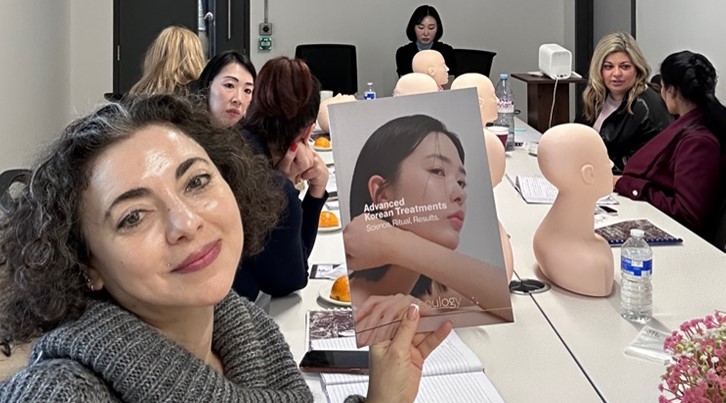
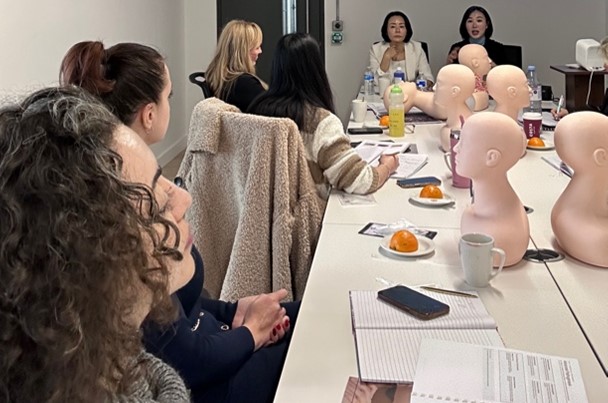
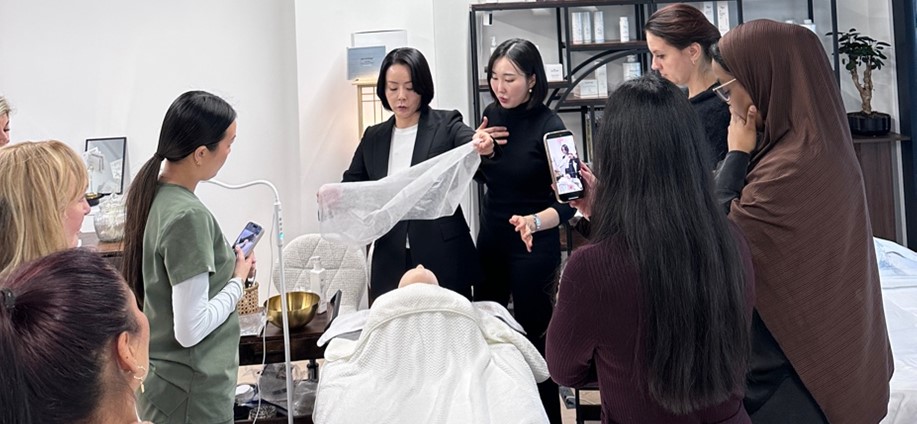
In Seoul clinics, in research-driven formulation labs, and increasingly in international professional immersions, including a recent Korean training hosted in London, one idea consistently surfaces:
Skin regeneration cannot be forced. It must be prepared.
This may sound obvious.
Yet much of modern aesthetic practice still revolves around stimulating harder, resurfacing deeper, correcting faster.
Korean clinical philosophy approaches the same objective from a different starting point.
Not treatment.
Terrain.
Before stimulating collagen, Korean practitioners ask a different set of questions:
Is the barrier stable?
Is inflammation controlled?
Is the microbiome balanced?
Is the extracellular matrix ready to respond?
Because regeneration is not triggered by procedures alone.
It is determined by the biological environment in which those procedures take place.
This physiology-first mindset is one of the reasons Korean aesthetic medicine continues to influence treatment strategy globally.
And it is precisely what many Western clinics are now beginning to explore.
The Strategic Difference: Correction vs Regeneration
Historically, Western aesthetic medicine has evolved around corrective interventions:
remove pigmentation
treat acne
resurface texture
tighten laxity
These interventions can be highly effective.
But the Korean philosophy asks a deeper question:
What determines whether these corrections actually last?
Regenerative treatments such as:
- polynucleotides
• exosomes
• microneedling
• biostimulatory injections
all rely on one fundamental biological mechanism:
fibroblast activation and collagen signalling.
However, fibroblasts do not operate in isolation.
They respond to the environment surrounding them.
If that environment is inflamed, barrier-compromised or microbiome-disrupted, the regenerative signal becomes weak or short-lived.
In other words:
The treatment may trigger regeneration.
But the skin may not sustain it.
This is where the Korean approach introduces a strategic shift.
Rather than focusing exclusively on stimulation, the emphasis moves toward modulation.
The Hidden Variable in Regenerative Treatments
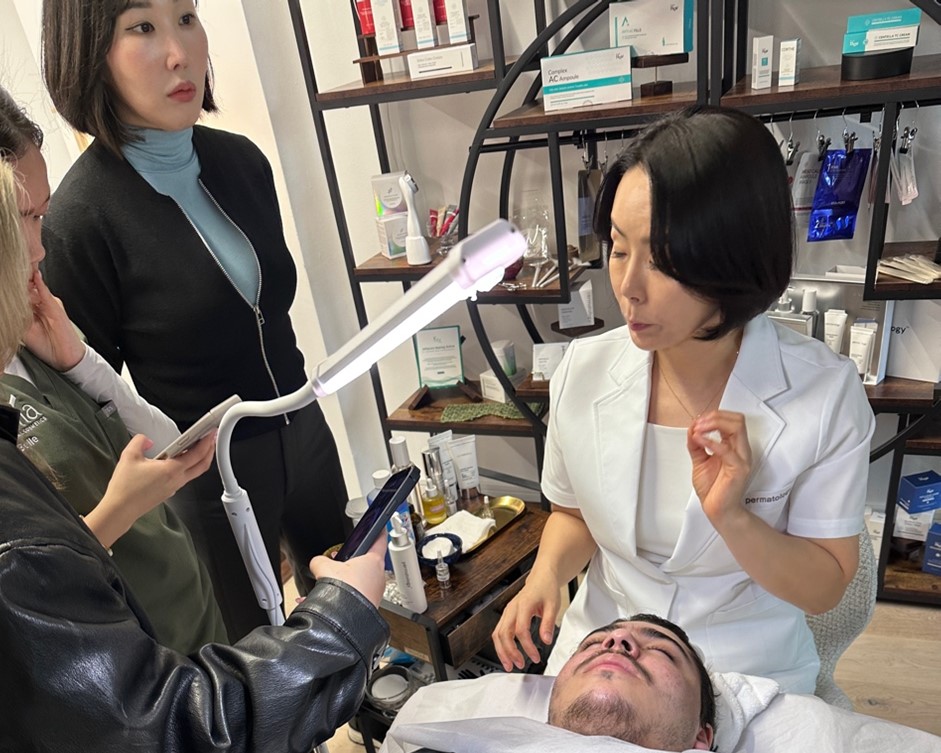
During the London immersion, the most repeated theme was surprisingly simple:
The procedure is only the trigger.
What happens afterward determines the outcome.
Modern regenerative treatments initiate complex biological cascades involving:
- cytokine signalling
• fibroblast recruitment
• collagen remodelling
• extracellular matrix reorganisation
But these cascades can easily become dysregulated.
If inflammation remains elevated, collagen synthesis becomes disorganised.
If barrier lipids are disrupted, transepidermal water loss increases and recovery slows.
If post-treatment ingredients destabilise the skin’s microbiome, inflammatory signalling continues.
In these cases, the regenerative response may occur, but it rarely stabilises.
This is why Korean protocols place extraordinary attention on aftercare architecture.
Not as retail.
But as biological support for regeneration.
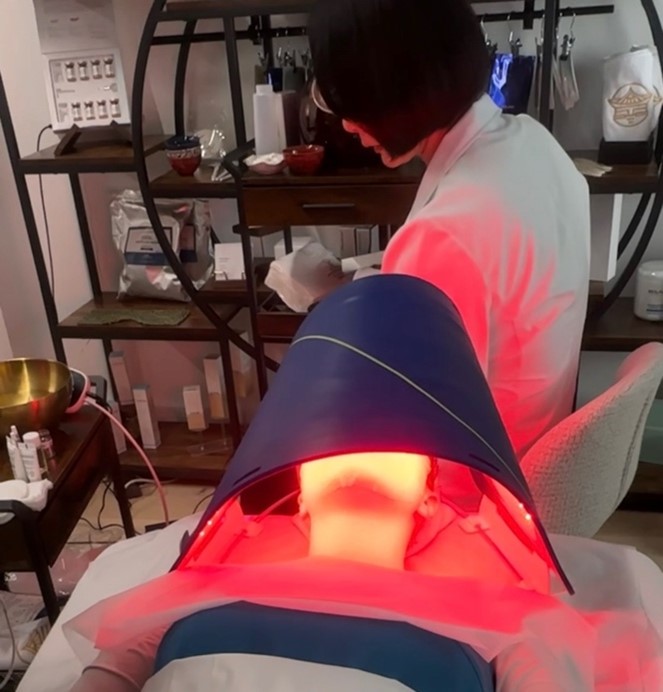
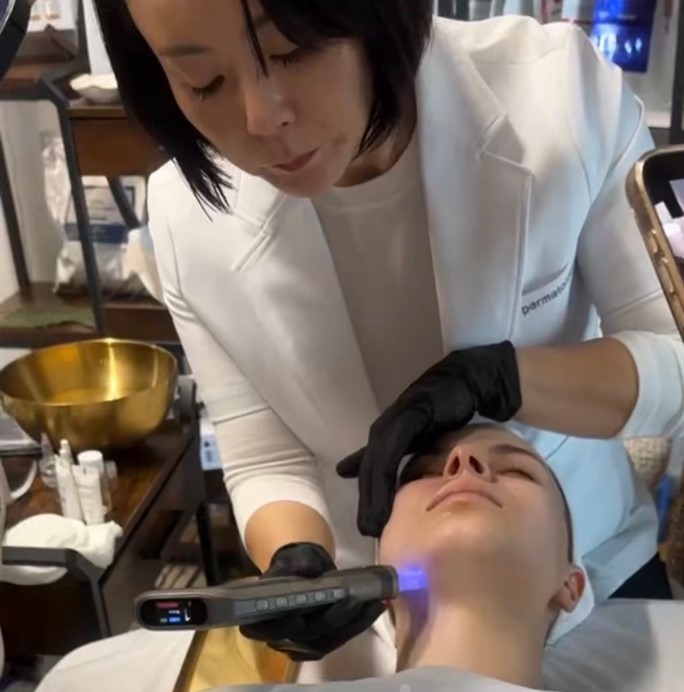
Regeneration Without Aggression
One of the most counterintuitive lessons from the Korean framework is the rejection of the “stronger is better” mindset.
Instead of pushing stimulation to its maximum threshold, the philosophy prioritises controlled signalling.
Peels are evaluated not by intensity but by:
- molecular size
• penetration behaviour
• barrier tolerance
• pigment pathway targeting
Similarly, technologies such as spicules or micro-channelling are viewed less as injury and more as communication tools with dermal cells.
Their effectiveness depends largely on what follows the stimulation.
When the recovery environment supports:
- lipid replenishment
• antioxidant buffering
• microbiome balance
• controlled hydration
the regenerative signal becomes organised and sustained.
When it does not, the signal becomes chaotic.
Why This Matters for European Clinics
For clinic owners and aesthetic professionals, the Korean philosophy introduces an interesting competitive perspective.
Most clinics differentiate through:
- devices
• injectables
• treatment menus
But the next generation of aesthetic differentiation may lie somewhere else entirely:
protocol intelligence.
Clinics that integrate physiology-first frameworks begin to shift from offering procedures to designing regenerative ecosystems.
This requires:
- deeper diagnostic literacy
• ingredient compatibility knowledge
• structured aftercare architecture
• long-term skin planning
In a saturated aesthetic market, this transition represents both a clinical and strategic advantage.
Bridging Ecosystems
One of the reasons I continue to engage closely with the Korean aesthetic environment, whether through clinical immersion, collaborations, or industry gatherings around the globe is that Korea offers something particularly valuable:
a cohesive integration between formulation science, treatment protocols, and regenerative biology.
Western clinics do not need to replicate Korean aesthetics.
But understanding the physiological principles that underpin it can profoundly reshape how treatments are designed and delivered.
The opportunity lies not in copying.
But in translating those insights into European clinical practice.
The Future of Intelligent Regeneration
Aesthetic medicine is evolving quickly.
The treatments are becoming more advanced.
But the real shift may lie in how those treatments are contextualised biologically.
Skin does not respond to force.
It responds to signals.
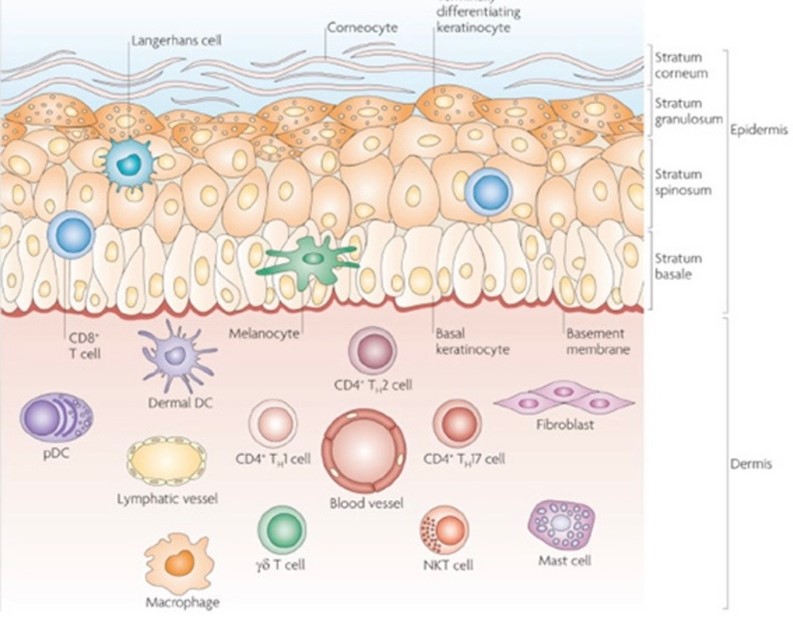
The professionals who understand how to manage those signalling environments — before, during and after treatment, will ultimately define the next standard of regenerative aesthetics.
Because regeneration is not an isolated event.
It is a biological conversation.
And the clinics that learn how to guide that conversation will lead the field.